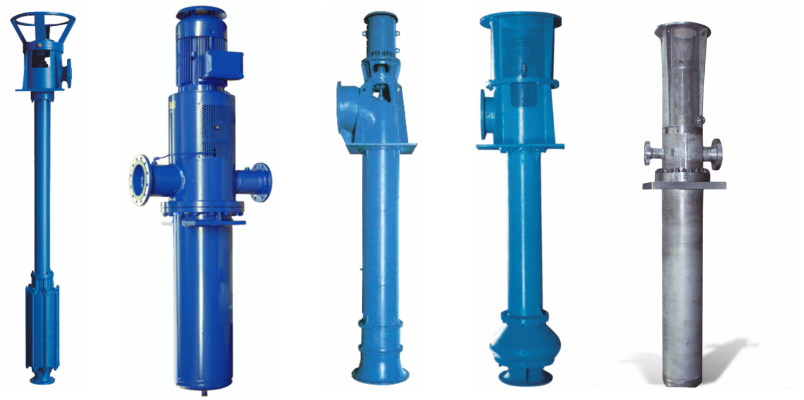


Cooling Water Pumps
Cooling water pumps circulate or transfer water through cooling towers, condensers, heat exchangers and industrial cooling systems. These pumps often operate continuously and at high flow rates, making hydraulic efficiency, reliability and correct materials selection essential.
AxFlow supplies industrial cooling water pumps for power generation, chemical and petrochemical plants, offshore platforms, manufacturing facilities and large water-circulation systems. Available technologies include split-case, vertical line-shaft, axial-flow, mixed-flow and large submersible pumps, with published capacities extending from moderate process duties to exceptionally high-volume water transfer.

What Is a Cooling Water Pump?
A cooling water pump moves water between a heat source and heat-rejection equipment. Depending on the system, it may circulate water through a process heat exchanger, pump cooled water from a cooling-tower basin or lift seawater, river water or surface water into a condenser circuit.
The pump must maintain the required flow and pressure across changing operating conditions while resisting corrosion, erosion, fouling and cavitation.
How Does a Cooling Water System Work?
Cooling water systems are generally arranged in one of three ways:
Open Recirculating Cooling Systems
Water absorbs heat from process equipment and returns to a cooling tower. A small proportion evaporates, removing heat from the remaining water, which collects in the tower basin and is pumped back through the system.
Closed-Loop Cooling Systems
Treated water or water-glycol solution circulates within a closed circuit between the process and a heat exchanger or cooler. The cooling water pump mainly overcomes pipework, valve and equipment resistance because the net static elevation generally balances within a fully closed loop.
Once-Through Cooling Systems
Water is drawn from a sea, river, lake or other source, passed through a condenser or heat exchanger and then discharged or returned. These systems can require very high-volume circulating water pumps, particularly in power stations, refineries and coastal industrial plants.
Which Pump Is Best for Cooling Water?
The best cooling water pump depends mainly on the required flow, total dynamic head, intake arrangement and water quality
| Pump Technology | Best suited to |
| Split-case double-suction pumps | High-flow, medium-head circulation from a dry pump room |
| Vertical line-shaft pumps | Cooling-tower basins, deep wet wells and seawater or river intakes |
| Axial-flow pumps | Extremely high-flow, low-head cooling-water circulation |
| Mixed-flow pumps | High flows requiring more head than an axial-flow pump normally provides |
| Submersible pumps | Wet-well installations where a dry pump house or long drive shaft is undesirable |
| Radial-flow centrifugal pumps | Lower-flow or higher-head auxiliary cooling-water systems |
Cooling Water Pump Applications
Power-Station Cooling Water
Power stations use large circulating water pumps to move cooling water through steam-surface condensers and heat-rejection systems.
Typical duties include:
- Condenser cooling water
- Cooling-tower circulation
- Auxiliary cooling water
- Once-through seawater or river-water cooling
- Heat-recovery and combined-cycle plant cooling
Axial- and mixed-flow pumps are often selected for the largest low- and medium-head duties, while split-case pumps suit many dry-installed circulation systems.
Cooling-Tower Pumps
Cooling-tower pumps draw cooled water from the tower basin and circulate it through process equipment, chillers or heat exchangers.
These pumps must be selected for the full system resistance, including:
- Static lift to the tower distribution system
- Heat-exchanger pressure loss
- Pipe and fitting losses
- Control-valve pressure drop
- Strainer and filtration losses
- Fouling allowance
Seawater Cooling and Offshore Platforms
Seawater lift pumps supply cooling and utility water to offshore platforms, coastal power stations, refineries and industrial facilities.
Vertical line-shaft, mixed-flow and submersible pumps are commonly considered because their hydraulic components can be positioned below the minimum water level. Materials must be selected for the actual chloride level, temperature, velocity, oxygen content and corrosion conditions.
Chemical, Petrochemical and Refining
Cooling water pumps circulate water through reactors, compressors, distillation systems, process coolers and heat exchangers.
Reliability is particularly important because loss of cooling water can interrupt production or require a controlled plant shutdown.
Manufacturing and Process Cooling
Cooling water pumps support equipment such as:
- Furnaces and induction systems
- Compressors
- Hydraulic systems
- Injection-moulding machines
- Paper and pulp machinery
- Steel and metal-processing equipment
- Mining and mineral-processing plants
- Large refrigeration and HVAC systems
How to Choose a Cooling Water Pump
Cooling water pump selection should be based on the complete system rather than flow rate alone.
Calculate the Required Flow
Cooling-water flow is determined by the process heat load and the permitted temperature rise across the system.
Define:
- Minimum cooling-water demand
- Normal operating flow
- Maximum design flow
- Supply and return temperatures
- Seasonal or process-load variation
- Future capacity requirements
Excessive design margins can result in an oversized pump, unnecessary throttling and operation away from the pump’s efficient operating region.
Determine Total Dynamic Head
The required pump head should include all resistance within the system.
For an open cooling-tower or once-through system, include:
- Static elevation
- Suction and discharge pipe losses
- Heat-exchanger or condenser pressure drop
- Cooling-tower distribution pressure
- Valve, strainer and fitting losses
- Discharge or outfall conditions
In a fully closed loop, the pump head is primarily determined by friction and equipment pressure losses rather than the total vertical height of the installation.
Select the Correct Hydraulic Design
Use the required flow and head to identify the most suitable pump type:
- Axial flow: highest flows at low head
- Mixed flow: high flow at low-to-medium head
- Split case: high flow at medium head
- Radial flow: lower flow with higher head
The pump should operate close to its best-efficiency point and within the manufacturer’s preferred operating region across the expected duty range. Operation too far from the intended region can reduce efficiency and increase hydraulic loading, vibration and wear.
Check NPSH and Cavitation Risk
The system’s net positive suction head available—NPSHa—must exceed the pump’s NPSH required—NPSHr—by an appropriate margin.
NPSHa is affected by:
- Minimum water level
- Atmospheric or vessel pressure
- Water temperature
- Pump elevation
- Suction-pipe losses
- Screens and strainers
- Intake velocity
Insufficient NPSH margin can result in noise, vibration, loss of performance, cavitation damage and reduced pump reliability.
Review the Intake Design
Large vertical cooling-water pumps require uniform, steady inlet flow with minimal swirl and entrained air.
The wet well, intake channel, pump spacing, submergence, screens and approach flow must be considered as part of the pumping system. Poor intake hydraulics can reduce efficiency and cause vibration, vortices and uneven loading even when the pump itself is correctly selected.
Consider Water Quality
Confirm whether the cooling medium is:
- Treated freshwater
- Cooling-tower water
- Brackish water
- Seawater
- River or surface water
- Treated wastewater
- Water-glycol solution
Also assess suspended solids, chlorides, pH, temperature, biological growth, treatment chemicals and scaling potential.
Select Suitable Materials
Depending on the water chemistry and project specification, material options can include:
- Cast iron
- Carbon steel
- Bronze
- Stainless steel
- Duplex stainless steel
- Super-duplex stainless steel
- Specialist corrosion-resistant alloys
Materials should be selected as a complete system—including casing, impeller, shaft, fasteners, wear components and seals—to avoid corrosion, erosion and galvanic incompatibility.
AxFlow Cooling Water Pump Ranges
The following AxFlow ranges are particularly well suited to cooling-water circulation, seawater lift and high-volume water transfer.
Published maximum figures are range limits and should not be treated as guaranteed duty points for every pump size, speed or material configuration.
Frequently Asked Questions
What is a cooling water pump?
A cooling water pump circulates or transfers water through heat exchangers, condensers, cooling towers and other equipment to remove heat from an industrial process or building system.
What type of pump is used for cooling water?
Centrifugal, split-case, vertical turbine, mixed-flow and axial-flow pumps are commonly used. Split-case pumps suit high-flow, medium-head circulation, while axial-flow pumps are preferred for extremely high-flow, low-head duties.
How do you size a cooling water pump?
Sizing requires the design water flow, total dynamic head, temperature, water quality, NPSH available and full operating range. The pump should be selected close to its best-efficiency point rather than solely by maximum capacity.
Why are split-case pumps used for cooling water?
Split-case double-suction pumps provide high flow, balanced hydraulic loading and convenient maintenance access. They are well suited to dry-installed cooling-tower, condenser and industrial circulation systems.
Which pump is best for seawater cooling?
Vertical line-shaft, mixed-flow or submersible pumps are commonly selected for seawater intakes. Final selection depends on flow, head, minimum water level, NPSH, intake design and materials compatible with the seawater conditions.
Can axial-flow pumps be used for cooling water?
Yes. Axial-flow pumps are particularly suitable for moving extremely large volumes of cooling water at low head, including power-station condenser and cooling-tower circulation duties.
Are cooling water pumps self-priming?
Most conventional cooling-water centrifugal pumps are not self-priming. They normally require flooded suction, a submerged pump bowl or a suitable priming system. Submersible and vertical wet-pit pumps keep the hydraulic section below the water level.
Can variable-speed drives be used on cooling water pumps?
Yes. Variable-speed drives can match flow to changing cooling demand and reduce throttling losses. The minimum operating speed, NPSH margin and permitted hydraulic operating region must still be checked.