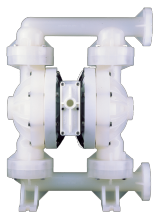
Self Priming Pumps
As the UK market leader in postive displacement pumps, AxFlow UK offers many types of self priming pumps
What is a Self-Priming Pump?
A self-priming pump is designed to remove air from the suction line and begin pumping without requiring repeated manual priming. Unlike standard centrifugal pumps, which normally require a flooded suction or external priming before operation, self-priming pumps retain enough liquid within the pump to create the vacuum needed to draw liquid into the suction line after start-up.
Self-priming pumps simplify installation where the pump is located above the liquid level and are widely used across industrial, chemical, food, water treatment and wastewater applications.
How Does a Self-Priming Pump Work?
The operating principle depends on the pump technology.
Self-priming centrifugal pumps retain liquid within the pump casing after shutdown. On start-up, this liquid mixes with the air in the suction line, creating a vacuum that gradually evacuates the air until the pump is fully primed and normal pumping begins.
Many positive displacement pumps, including peristaltic, AODD, progressive cavity, eccentric disc and some rotary lobe pumps, achieve self-priming by creating expanding cavities that generate suction, allowing them to draw liquid into the pump without external priming under suitable operating conditions.
Why Choose a Self-Priming Pump?
Self-priming pumps offer significant operational advantages where maintaining a flooded suction is impractical.
Key benefits include:
- Eliminates repeated manual priming
- Suitable for suction lift applications
- Simplifies installation above the liquid source
- Reduces downtime during intermittent operation
- Improves process reliability
- Available for clean liquids, chemicals, viscous fluids and solids-containing media
- Wide choice of centrifugal and positive displacement technologies
Applications of Self-Priming Pumps
Self-priming pumps are used wherever liquids must be lifted from below pump level or where suction lines may empty between operating cycles.
Typical applications include:
Water & Wastewater
- Drainage
- Sump emptying
- Sludge transfer
- Wastewater pumping
- Tank emptying
Chemical Processing
- Chemical transfer
- Acids and alkalis
- Solvents
- Corrosive liquids
Food & Beverage
- CIP return systems
- Product recovery
- Hygienic liquid transfer
- Brewery and dairy processes
Industrial Processes
- IBC and drum emptying
- Tank transfer
- Loading and unloading
- Cooling water systems
- General process pumping
Which Pump Technologies Are Self-Priming?
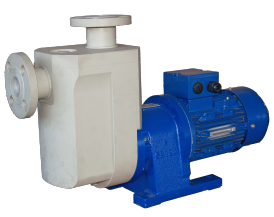
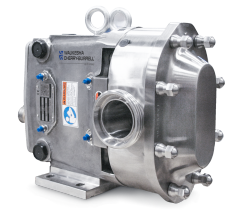
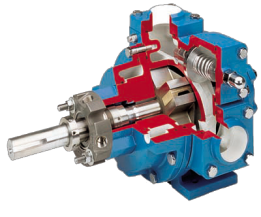
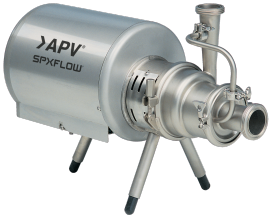
Our range of pumps that can be self priming includes AODD, peristaltic, vane, centrifugal, ECP, eccentric disc, progressive cavity, turbine and rotary lobe. As a result we have self priming pumps that can handle solids, satisfy hygienic requirements and withstand corrosive liquids.







How to Choose a Self-Priming Pump
Selecting the correct self-priming pump depends on the complete application, not simply the suction lift requirement.
Consider:
- Required suction lift
- Flow rate
- Differential pressure
- Fluid viscosity
- Solids content
- Chemical compatibility
- Temperature
- Hygienic requirements
- Dry-running requirements
AxFlow's engineers assess the complete pumping duty to recommend the most appropriate self-priming technology for reliable, efficient long-term operation.
Benefits of Self Priming Pumps
- Prevents dry running: Self-priming pumps are capable of re-priming themselves automatically if the fluid level in the suction line drops below the pump's impeller. This self-priming ability therefore prevents dry running, thus ensuring continuous operation even during fluctuations in fluid levels.
- Lower maintenance requirements: The absence of external priming systems or foot valves reduces the complexity of the pump's design, thus reducing the number of components that may require maintenance.
- Improved efficiency: Self-priming pumps are designed with optimal hydraulic performance, which increases overall efficiency, therefore saving energy and decreasing operating costs.
- Versatility: Self priming pumps can be utilised throughout various
Centrifugal or Positive displacement pumps
Centrifugal self-priming pumps and positive displacement self-priming pumps tend to differ in their operating principles. Centrifugal self-priming pumps utilise a specially engineered impeller and casing to handle air or gas in the suction line, which creates a vacuum, drawing in the fluid to prime the pump without external assistance. Whereas, positive displacement self-priming pumps tend to rely on an external priming process, such as a foot valve or vacuum pump, to remove air from the suction line and fill the pump chamber with the fluid before they can effectively operate.
Frequently Asked Questions
What is a self-priming pump?
A self-priming pump removes air from the suction line and draws liquid into the pump without repeated manual priming after its initial fill.
How does a self-priming pump work?
Self-priming centrifugal pumps retain liquid inside the casing to create a vacuum, while many positive displacement pumps generate suction through their pumping action.
What is the difference between a self-priming and a standard centrifugal pump?
A standard centrifugal pump generally requires a flooded suction or external priming, whereas a self-priming centrifugal pump can automatically re-prime after the initial start-up by retaining liquid within the casing.
Which pumps are naturally self-priming?
Peristaltic pumps, AODD pumps, progressive cavity pumps, eccentric disc pumps and many rotary lobe pumps all offer self-priming capability, while specialist centrifugal pumps are specifically designed for self-priming duties.
What industries use self-priming pumps?
Self-priming pumps are widely used in water and wastewater treatment, chemical processing, food and beverage production, pharmaceutical manufacturing and general industrial liquid transfer.