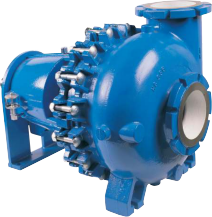
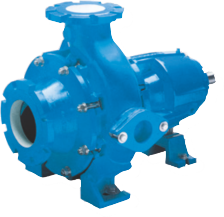
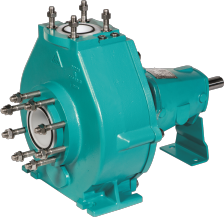
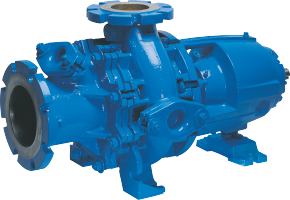
Solids Handling Pumps
Details of AxFlow's extensive UK based capabilities when it comes to handling solid ladened liquids.
Solids handling pumps transfer liquids containing suspended solids, abrasive particles, fibres, sludge or delicate product pieces without repeated blockage, excessive wear or unacceptable product damage.
AxFlow supplies industrial solids handling pumps for wastewater, mining, food processing, chemicals, anaerobic digestion, paper and general manufacturing. Available technologies include recessed-impeller, screw centrifugal, chopper, peristaltic, progressive-cavity, AODD and low-shear positive displacement pumps.
The right pump depends on more than maximum particle size. Solids concentration, shape, hardness, settling behaviour, viscosity, abrasiveness and shear sensitivity must all be considered.
What Is a Solids Handling Pump?
A solids handling pump is designed to transfer a liquid containing suspended or entrained solid material.
Solids may include:
- Wastewater sludge and sewage
- Sand, grit and mineral particles
- Fibres, rags and paper stock
- Food pieces and soft particulates
- Agricultural waste and digestate
- Chemical precipitates
- Paint pigments and ceramic slip
- Mine tailings and process slurries
“Solids handling pump” describes the application rather than one pump design. A pump that handles soft food pieces may be unsuitable for sharp mineral particles, while a heavy-duty slurry pump may damage a delicate product.
Why Are Solids-Containing Liquids Difficult to Pump?
Blockage and Ragging
Large, fibrous or irregular solids can become trapped in impellers, check valves, suction lines and narrow internal passages.
The pump’s free passage, inlet design and pipework must therefore suit the solids—not simply the liquid flow rate.
Abrasive Wear
Sand, grit, silica and mineral particles can erode impellers, casings, rotors, stators and seals.
Wear depends on particle hardness, size, shape, concentration, pump speed and material selection. Sharp, angular particles are generally more damaging than smooth or rounded solids. (pumps.org)
Settling
Some solids settle when the liquid velocity falls too low. This can cause deposits, restricted pipework and eventual blockage.
The complete system should maintain a suitable transport velocity while avoiding unnecessarily high speeds that increase wear and energy consumption. Hydraulic Institute guidance confirms that slurries affect pump performance, cause wet-end wear and can settle within pipework if velocity is insufficient. (pumps.org)
Product Damage
Food pieces, biological floc, crystals and other fragile solids may need to remain intact.
For these duties, internal clearances, pump speed and shear rate can be as important as the maximum solids passage.
| Pump technology | Best suited to | Important consideration |
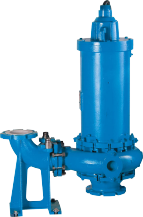
| Recessed-impeller or vortex pumps | Sludge, grit, fibres, entrained gas and irregular solids | Confirm efficiency, head and wear materials for the actual slurry |
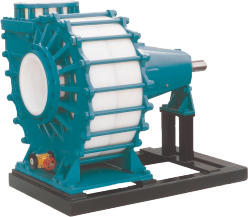
| Screw centrifugal pumps | Thick sludge, large or stringy solids and shear-sensitive media | Hydraulic selection must reflect solids loading and operating range |
| Chopper pumps | Rags, fibres and solids that require size reduction | The solids are deliberately cut rather than preserved |
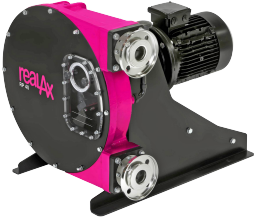
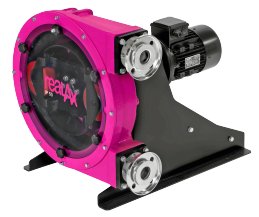
| Peristaltic hose pumps | Abrasive slurry, high-solids media, filter-press feed and viscous products | Flow is pulsating and hose compatibility determines service life |
| Progressive-cavity pumps | Viscous sludge, controlled flow and higher-pressure solids transfer | Protect the stator against dry running and excessive abrasive wear |
| AODD pumps | Portable, intermittent and variable solids-transfer duties | Check valve design and pump size determine solids passage |
Solids Handling Pump Applications
- Water and Wastewater
- Mining and Minerals
- Food and Beverage
- Chemical Processing
- Anaerobic Digestion and Agriculture
- Paper, Pulp and General Industry
How to Choose a Solids Handling Pump
Selecting the right solids handling pump depends on the solids, the carrier liquid and the complete pumping system.
Key factors include:
- Solids characteristics – Confirm the particle size, shape, concentration and whether the solids are abrasive, fibrous or fragile.
- Liquid properties – Consider viscosity, temperature, density and chemical compatibility.
- Flow and pressure – Define the required flow rate and total discharge head or pressure.
- Solids passage – Check the pump, valves and pipework for restrictions that could cause blockage.
- Materials and pump speed – Select materials and an operating speed that minimise wear, corrosion and product damage.
- Maintenance access – Consider how easily blockages can be cleared and wear components replaced.
The smallest passage in the system can determine its true solids-handling capability. AxFlow engineers assess the complete application to recommend the most reliable pump technology for sludge, slurry, wastewater, fibrous solids or delicate products.
Solids Handling Pump Technologies
AxFlow offers several pump technologies for liquids containing solids, each suited to different operating conditions.
SENSITIVE SOLIDS
- ECP Pumps
- Peristaltic Pumps
- Eccentric Disc Pumps
- AODD Pumps
- Progessive Cavity Pumps
- Rotary Lobe Pumps
Abrasive Solids
Why Choose AxFlow?
AxFlow combines application expertise with one of the UK's most comprehensive industrial pump portfolios. Rather than recommending a single technology, we assess your process conditions and specify the pump best suited to your application, helping to reduce maintenance, improve reliability and optimise whole-life operating costs.
Need help selecting the right solids handling pump? Contact our technical team for expert advice on pump technology, sizing and system design.