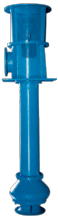
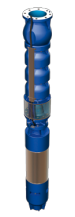
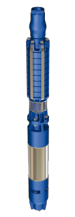
Vertical Pumps
AxFlow offer one of the largest ranges of vertical pumps in the UK from plastic sump pumps to large axial flow units.
Vertical Pumps
Vertical pumps are used where liquid must be lifted from a tank, sump, borehole, wet well, river, dock or seawater intake. Depending on the design, the pump hydraulic components may be submerged while the motor remains above the liquid, or the complete pump and motor may operate underwater.
AxFlow supplies vertical lineshaft pumps, vertical turbine pumps, chemical sump pumps, borehole pumps and fully submersible pumps. Available hydraulic designs include radial-flow, mixed-flow and axial-flow pumps, covering applications from low-flow, high-head water supply to exceptionally high-volume drainage and cooling-water duties.
What Is a Vertical Pump?
A vertical pump is a pump arranged with its main shaft in a vertical orientation. The term describes the pump’s configuration rather than one single hydraulic technology.
Vertical pumps can use:
- Radial-flow impellers for lower-flow, higher-head duties
- Mixed-flow impellers for high flow at moderate head
- Axial-flow propellers for very high flow at low head
The motor may be installed above the mounting plate and connected to the pump through a lineshaft, or positioned below the liquid as part of a fully submersible pump set. The Hydraulic Institute classifies several vertically suspended pump arrangements, including diffuser, volute, axial-flow, lineshaft, cantilever and double-casing designs.
How Does a Vertical Pump Work?
In a typical vertical lineshaft or vertical turbine pump, the bowl assembly and impeller are positioned below the liquid level. A motor above the wet well drives the impeller through one or more shaft sections.
Liquid enters through the suction bell and passes into the rotating impeller. The impeller increases the liquid’s energy before a diffuser or volute converts part of its velocity into pressure. The water then travels upwards through the discharge column or a separate discharge pipe.
A multistage vertical pump uses several impellers and diffusers in series. Each stage adds head, allowing the pump to deliver water over long vertical distances or against high system pressure.
In a submersible vertical pump, the motor is positioned beneath the liquid and directly coupled to the hydraulic section. This removes the need for a long lineshaft and above-ground motor arrangement. Gruppo Aturia offers both lineshaft and fully submersible designs using radial-, mixed- and axial-flow hydraulics.
Types of Vertical Pumps
Vertical Lineshaft Pumps
A vertical lineshaft pump, also commonly written as a vertical line shaft pump, has a submerged bowl assembly driven by a motor installed above the wet well.
Lineshaft pumps are commonly used for:
- Seawater lift
- Cooling-water circulation
- River and reservoir abstraction
- Firewater systems
- Irrigation
- Drainage
- Process-water supply
They are available with single or multiple stages and with radial-, mixed- or axial-flow hydraulics.
Vertical Turbine Pumps
A vertical turbine pump normally uses one or more diffuser-bowl stages positioned below the minimum water level. Despite the name, it is a rotodynamic pump rather than a turbine in the power-generation sense.
Vertical turbine pumps are particularly suitable for deep wet wells, tanks and boreholes where the pump inlet must remain submerged. Depending on the duty, they may be driven through a lineshaft or by a submersible motor.
Vertical Sump Pumps
Vertical sump pumps are installed through the top of a tank, pit or process vessel. The motor remains above the mounting plate while the hydraulic casing operates within the liquid.
They are widely used for:
- Chemical drainage
- Tank emptying
- Effluent transfer
- Process sumps
- Corrosive liquids
- Liquids containing limited suspended solids
Cantilever sump pumps have no submerged shaft bearings, while longer supported designs may use one or more intermediate bearings.
Vertical Axial-Flow Pumps
Axial-flow pumps use a propeller-style impeller that moves liquid mainly parallel to the shaft.
They are best suited to very high-flow, low-head applications, including:
- Flood defence
- Land drainage
- Cooling-water circulation
- Stormwater pumping
- Dock dewatering
- Irrigation
Vertical Mixed-Flow Pumps
Mixed-flow pumps generate both axial and radial movement through the impeller. They provide more head than a typical axial-flow pump while retaining high-flow capability.
Common applications include seawater lift, cooling water, large pumping stations, irrigation and industrial water transfer.
Borehole and Submersible Turbine Pumps
Borehole pumps place both the pump and motor below the water level. They are commonly multistage and are used to lift groundwater from deep wells.
Submersible radial-flow pumps are typically selected for higher-head duties, while submersible mixed-flow pumps provide greater flow at moderate head.
API 610 Vertical Pumps
API 610 identifies several vertical pump configurations used in oil, gas, petrochemical and heavy-process applications.
Common examples include:
- VS1: single-casing diffuser pump with discharge through the column
- VS3: single-casing axial-flow pump
- VS4: separate-discharge lineshaft sump pump
- VS5: cantilever sump pump
- VS6: double-casing diffuser pump
Current Hydraulic Institute terminology recommends “lineshaft” as one word and uses “suction can” rather than “suction barrel” for the outer inlet casing of a vertical pump.
Why Choose a Vertical Pump?
Vertical pumps provide several practical advantages where the liquid source is below installation level.
Key benefits include:
- Submerged pump inlet, providing a flooded suction when the required minimum water level is maintained
- High-flow capability for water abstraction, drainage and circulation
- Small above-ground footprint compared with many equivalent horizontal installations
- Suitability for deep tanks, sumps, wells and wet pits
- Flexible column lengths to suit different installation depths
- Motor-above-liquid options, simplifying access and keeping the driver away from the process fluid
- Fully submersible options where above-ground space or long shafting is undesirable
- Wide hydraulic range, from high-head radial designs to high-volume axial-flow pumps
- Multiple material options for freshwater, seawater, chemicals and industrial effluent
A submerged inlet can improve suction conditions, but it does not remove the need to calculate NPSH or provide adequate pump submergence.
Applications of Vertical Pumps
- Water Abstraction and Distribution
- Seawater Lift and Offshore Applications
- Cooling Water and Power Generation
- Drainage and Flood Control
- Firewater Systems
- Chemical Processing
- Mining, Irrigation and Industrial Water
How to Choose a Vertical Pump
Selecting the correct vertical pump requires a review of the hydraulic duty, liquid properties and installation—not just the required maximum flow.
Define the Required Flow and Head
Establish:
- Minimum, normal and maximum flow
- Total dynamic head
- Static elevation
- Pipework and fitting losses
- Equipment pressure losses
- Required discharge pressure
- Future operating requirements
The pump should operate within its permitted hydraulic range and, where practical, close to its best-efficiency region.
Identify the Minimum and Maximum Water Levels
Vertical pump selection must account for every expected liquid level, including:
- Normal operating level
- Minimum operating level
- Start and stop levels
- Emergency low level
- Maximum flood level
Check NPSH and Submergence
The system’s NPSH available must exceed the pump’s NPSH required by an appropriate margin.
Adequate submergence is also needed to prevent surface vortices from drawing air into the suction bell. The Hydraulic Institute defines submergence as the vertical distance between the liquid surface and the pump inlet and notes that the required value may need to be increased to satisfy NPSH requirements.
Review the Wet-Well and Intake Design
A correctly selected pump can still perform poorly if the intake creates:
- Swirl
- Uneven velocity
- Air entrainment
- Surface or submerged vortices
- Sediment build-up
- Flow separation
Pump spacing, suction-bell clearance, wet-well shape, approach velocity, screens and minimum water level should therefore be reviewed as part of the complete installation.
Large or unusual pumping stations may require computational or physical hydraulic modelling.
Assess the Pumped Liquid
Confirm:
- Liquid composition
- Temperature
- Viscosity
- Density
- Corrosiveness
- Solids concentration
- Maximum particle size
- Fibrous material
- Abrasiveness
- Gas or air content
Standard vertical turbine pumps are generally designed for clean or lightly contaminated liquids. Significant solids or fibres may require an open impeller, wider passages or a specialist solids-handling design.
Select Suitable Materials
Materials should be selected for the complete wetted assembly, including:
- Bowl or volute casing
- Impeller
- Shaft
- Column
- Fasteners
- Wear rings
- Shaft sleeves
- Bearings
- Mechanical seal or packing
Available materials can include cast iron, carbon steel, bronze, stainless steel, duplex, super duplex, polypropylene, PVDF and FRP.
Choose Between Lineshaft and Submersible Designs
A lineshaft pump keeps the motor above the liquid, providing accessible motor maintenance and a wide choice of drivers. However, long pumps require careful attention to shaft alignment, bearings, column rigidity and installation tolerances.
A submersible pump eliminates the long lineshaft and can simplify the above-ground arrangement. Motor cooling, cable integrity, sealing, accessibility and pump-removal arrangements must be considered.
Review Bearing Lubrication
Lineshaft bearings may be lubricated by the pumped liquid or by an external clean-water or oil system, depending on the pump design and process fluid.
Where the liquid contains abrasive solids or does not provide suitable lubrication, an external bearing-lubrication arrangement may be required.
Plan for Installation and Maintenance
Consider:
- Available headroom
- Crane and lifting access
- Maximum removable component length
- Pump weight
- Shaft alignment
- Baseplate and soleplate design
- Discharge-pipe loading
- Motor removal
- Wet-well access
- Condition-monitoring requirements
For long vertical pumps, correct installation is critical to controlling vibration and bearing wear.
Confirm Standards and Certification
Depending on the application, requirements may include:
- API 610
- ATEX
- NFPA 20
- FM approval
- ISO 9906 performance testing
- Project-specific material certification
- Vibration testing
- Inspection and test plans
Vertical Line Shaft Pumps
Gruppo Aturia have one of the largest ranges of vertical line shaft pumps in the world. We are proud to work with Gruppo Aturia to bring this specially selected range to the UK.
more about vertical Line Shaft Pumps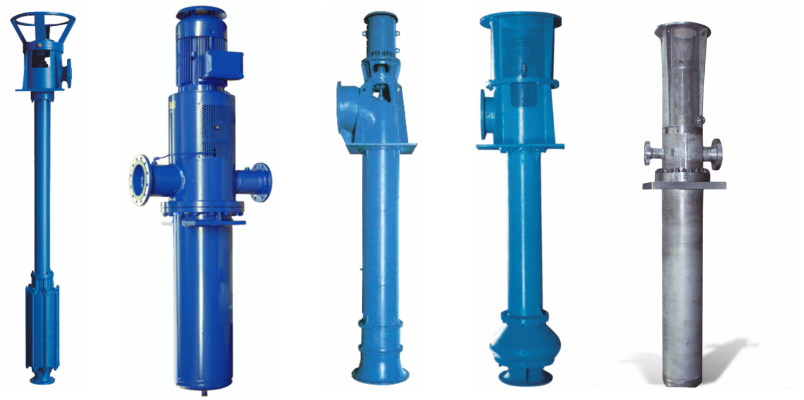
Borehole Pumps
AxFlow represent Gruppo Aturia the world leaders in large Borehole Pumps from sizes above 6" upwards.
More about borehole pumps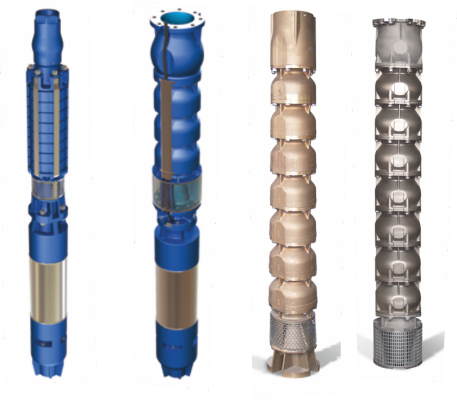
Large Pump Repair
AxFlow have become one of the leading repairers of large pumps in the UK
read more about large pump repair